Most people think of voice assistants as music players. “Alexa, play jazz.” “Hey Google, play the oldies.” But playing music is just the beginning.
Amazon Alexa and Google Home can help you with dozens of daily tasks. They can remind you to take your medication. They can call your family hands-free. They can read you the news, check the weather, and even help in an emergency.
If you have one of these devices sitting on your counter collecting dust, or if you have been thinking about getting one, this guide shows you what they can really do.
What Are Alexa and Google Home?
Amazon Alexa is the voice assistant inside Amazon Echo devices. You talk to it by saying “Alexa” followed by your request.
Google Home (now called Google Nest) is Google’s voice assistant. You talk to it by saying “Hey Google” or “OK Google.”
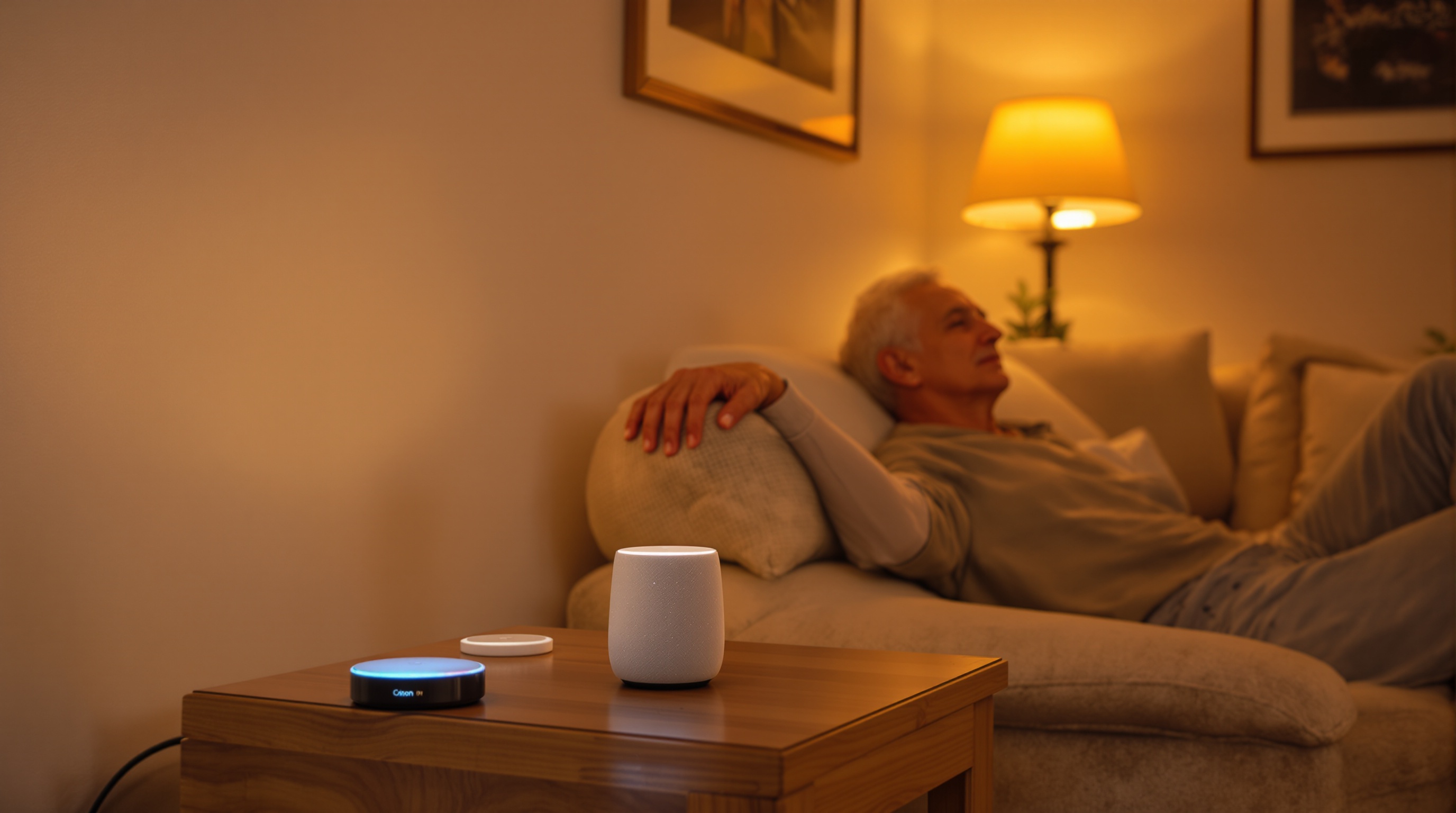
Both devices are small speakers that sit on a table or counter. They connect to your Wi-Fi and respond to your voice. You do not need to press any buttons. Just speak, and they answer.
Some models have screens (like the Echo Show or Google Nest Hub). These show you photos, video calls, recipes, and more. Models with screens are especially useful for seniors.
Setting Up Your Device
What You Need
- A Wi-Fi connection at home
- A smartphone or tablet (for the initial setup only)
- An Amazon account (for Alexa) or a Google account (for Google Home)
Step-by-Step Setup
- Plug in the device. Place it on a table or counter in a central spot. The kitchen or living room works well.
- Download the app. Get the “Amazon Alexa” app or the “Google Home” app on your phone or tablet.
- Open the app and follow the prompts. The app will find your device and connect it to your Wi-Fi.
- Test it. Say “Alexa, what time is it?” or “Hey Google, what time is it?” If it answers, you are all set.
Setup takes about 10 minutes.
12 Practical Uses for Seniors
1. Medication Reminders
Forgetting to take medication is a common problem. Your voice assistant can help.
How to set it up:
- “Alexa, remind me to take my blood pressure pill every day at 8 AM.”
- “Hey Google, set a daily reminder for 6 PM to take my evening medication.”
The device will announce the reminder out loud at the time you set. You can set as many reminders as you need.
2. Hands-Free Phone Calls
You can call family and friends without picking up a phone. This is especially helpful if you have arthritis or limited mobility.
With Alexa:
- “Alexa, call [contact name].” (You need to set up contacts in the Alexa app first.)
- You can also use “Alexa, drop in on [family member’s device]” for instant two-way communication with family members who also have Echo devices.
With Google:
- “Hey Google, call [contact name].” (Link your phone contacts through the Google Home app.)
Calls to US phone numbers are free on both devices.
3. Emergency Help
In an emergency, your voice assistant can call for help.
- “Alexa, call 911.” (Available in the US on most Echo devices.)
- “Hey Google, call 911.”
You can also set up an emergency contact:
- “Alexa, call my daughter.”
- “Hey Google, call my son.”
If you have an Echo Show or Google Nest Hub with a screen, the person you call can also see you on video, which helps them understand the situation.
Note: A voice assistant is not a replacement for a medical alert system. But it can be a helpful backup.
4. Daily News and Weather
Start your morning with a quick briefing.
- “Alexa, what’s the weather today?”
- “Hey Google, give me my daily news briefing.”
- “Alexa, what’s the forecast for this week?”
- “Hey Google, will it rain today?”
You can customize your news sources in the app to hear from outlets you trust.
5. Timers and Alarms
These are simple but surprisingly useful.
- “Alexa, set a timer for 20 minutes.” (Great for cooking.)
- “Hey Google, wake me up at 7 AM.”
- “Alexa, set a timer called ‘laundry’ for 45 minutes.”
You can run multiple timers at once. The device will tell you which timer went off.
6. Smart Home Controls
If you have smart light bulbs, a smart thermostat, or smart plugs, you can control them with your voice.
- “Alexa, turn off the living room lights.”
- “Hey Google, set the thermostat to 72 degrees.”
- “Alexa, turn on the porch light.”
This is helpful if you have trouble reaching light switches or getting up to adjust the thermostat. Smart plugs (about $10 to $15 each) can make any lamp or appliance voice-controlled.
7. Audiobooks and Podcasts
If reading small print is difficult, let your device read to you.
- “Alexa, read my Kindle book.” (Works with Amazon Kindle books.)
- “Hey Google, read [book title].” (Works with Google Play Books.)
- “Alexa, play the podcast [name].”
- “Hey Google, play the NPR Politics podcast.”
You can pause, rewind, and fast-forward with voice commands.
8. Calendar and Appointments
Keep track of your schedule without writing it down.
- “Alexa, add a doctor’s appointment on Thursday at 2 PM.”
- “Hey Google, what’s on my calendar tomorrow?”
- “Alexa, when is my next appointment?”
Link your Google Calendar or Apple Calendar through the app for the best experience.
9. Shopping Lists and To-Do Lists
- “Alexa, add milk to my shopping list.”
- “Hey Google, add eggs to my shopping list.”
- “Alexa, what’s on my shopping list?”
The list saves to the app on your phone, so you can check it at the store.
10. Games and Entertainment
Voice assistants have hundreds of free games and activities.
- “Alexa, let’s play Jeopardy.”
- “Hey Google, play trivia.”
- “Alexa, tell me a joke.”
- “Hey Google, tell me a riddle.”
- “Alexa, play 20 Questions.”
These are fun to play alone or with grandchildren.
11. Fall Detection and Check-Ins
Amazon offers a paid service called Alexa Together ($20/month) designed for seniors living alone. It includes:
- Fall detection (with compatible devices)
- Activity alerts that notify a family member if you have not interacted with your Echo device by a certain time
- 24/7 Urgent Response for emergencies
- Remote assist so family members can add reminders and manage your device from their own Alexa app
Google does not have an exact equivalent, but you can set up daily “check-in” routines that call a family member at a set time.
12. Video Calls (Devices with Screens)
If you have an Echo Show or Google Nest Hub Max, you can make video calls.
- “Alexa, video call [name].”
- “Hey Google, video call [name].”
The screen shows the person you are calling. This is one of the easiest ways to video chat because there is nothing to hold. The device sits on the counter, and you just talk.
Alexa vs. Google Home: Which Is Better for Seniors?
Both are good choices. Here is how they compare:
| Feature | Alexa (Amazon Echo) | Google Home (Nest) |
|---|---|---|
| Voice clarity | Excellent | Excellent |
| Smart home support | Widest compatibility | Very good |
| Phone calls | Free US calls | Free US calls |
| Screen option | Echo Show 8, 10, 15 | Nest Hub, Nest Hub Max |
| Senior features | Alexa Together ($20/mo) | Basic routines only |
| Best for | Smart home, shopping, Kindle | Search questions, calendar |
Our recommendation: If you want senior-specific features like fall detection and activity alerts, go with Alexa and consider Alexa Together. If you already use Gmail and Google Calendar, Google Home connects to those more smoothly.
Tips for Getting the Most Out of Your Device
- Speak clearly and at normal volume. You do not need to shout. The microphones are very sensitive.
- Place it in a central location. The device hears best when it is in the room where you spend the most time.
- Start with two or three features. Do not try to learn everything at once. Start with reminders, weather, and phone calls. Add more over time.
- Ask it anything. “Alexa, how many cups are in a quart?” or “Hey Google, what year did the Dodgers win the World Series?” These devices are great for quick answers.
- Use routines. In the app, you can set up a “Good Morning” routine that plays the weather, reads your calendar, and turns on the lights, all with one command.
- Mute when you want privacy. Both devices have a mute button that turns off the microphone. Press it when you want the device to stop listening.
Common Concerns
”Is it always listening to me?”
The device listens for its wake word (“Alexa” or “Hey Google”) but does not record or store your conversations unless you say the wake word first. You can review and delete your voice history in the app. You can also press the mute button at any time to turn off the microphone completely.
”Is it hard to use?”
No. You just talk to it. There are no buttons to press, no screens to tap, no passwords to remember. If you can ask a question out loud, you can use a voice assistant.
”What if I say the wrong thing?”
Nothing bad will happen. If the device does not understand you, it will say so. Just try again with different words. You cannot break it by saying the wrong thing.
”Do I need to pay a monthly fee?”
The basic features are all free. You only pay a monthly fee if you subscribe to optional services like Alexa Together or music streaming.
The Bottom Line
Voice assistants are some of the most useful and easiest-to-use devices for seniors. They cost $30 to $100 (or up to $250 for models with screens), and most features are free to use.
Start simple. Set a medication reminder. Ask about the weather. Call a family member. Once you get comfortable, explore more features at your own pace.
You might be surprised how quickly a voice assistant becomes part of your daily routine.
Reported by Lisa Chen with additional research from the SeniorDaily editorial team. For corrections or updates, please contact us.
Topics in this story

The Best Free Apps for Staying Connected with Family Across the Country
Discover the best free apps for video calls, photo sharing, and group chats so you can stay close to family no matter the distance.
Smart Home Devices That Help Seniors Live Independently: A Beginner's Guide
Learn how smart home devices like voice assistants, smart lights, and video doorbells can help you live safely and independently at home.

Why I Am Optimistic About Technology for Older Adults
A retired engineer makes the case that technology is getting better for seniors, not worse, and explains why the best is still ahead.