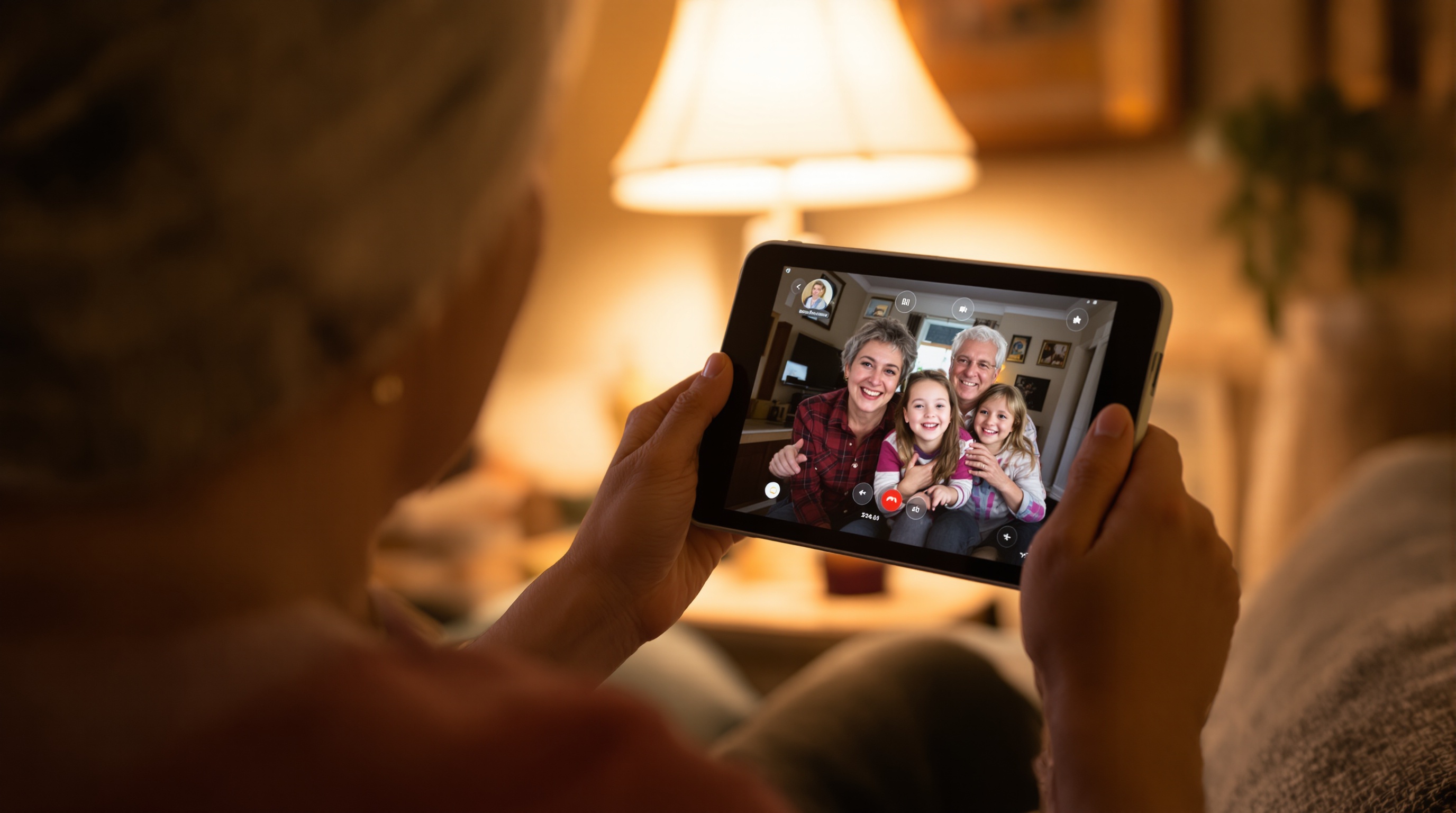
I am 71 years old, and I spend a good part of my day with technology. I video call my grandchildren. I track my blood pressure with a wrist monitor that sends data to my doctor. I order groceries from my tablet when my knee is acting up. Last week, I used a voice assistant to set three reminders, play jazz, and check the weather without touching a single button.
I know the common story. Technology is confusing for older adults. It changes too fast. It is designed by 25-year-olds who do not think about anyone over 40. The fonts are too small, the buttons are too tiny, and every update moves things around for no reason.
Some of that is true. But here is what I also see: technology is getting better for us. Steadily, meaningfully better. And I believe the next ten years will bring changes that make life genuinely easier for older adults.
Let me tell you why.
Voice Technology Changed Everything
If I could point to one development that mattered most for older adults, it would be voice interfaces.
Think about what a voice assistant removes from the equation. No tiny keyboards. No hunting for the right menu. No squinting at small text. You just talk, and things happen.
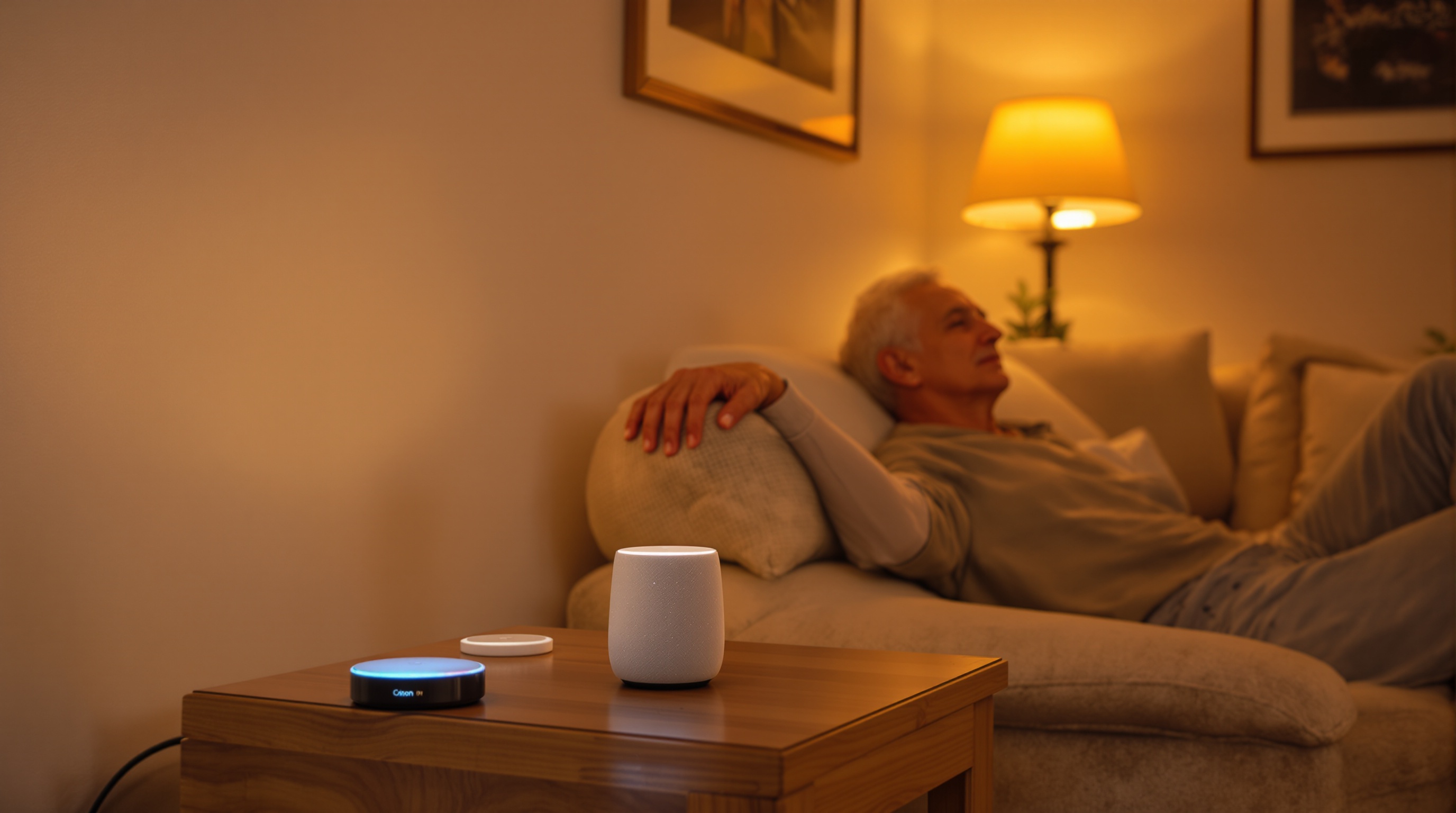
My mother is 94. She cannot use a smartphone. Her fingers shake, her eyes are not what they were, and touch screens frustrate her. But she talks to her smart speaker every day. She asks it for the weather, for music, for the time. She tells it to call me. It works.
That is not a small thing. That is an older woman living alone who now has instant access to information and connection, using the most natural interface humans have: speech.
Voice technology is not perfect yet. It struggles with some accents. It misunderstands questions sometimes. But it improves every year. And for people with arthritis, tremors, low vision, or simply a dislike of complicated screens, it has been transformative.
Health Monitoring Is Becoming Effortless
I spent 30 years as a biomedical engineer. I watched medical devices go from room-sized machines to things that fit on your wrist. The pace of change still amazes me.
Today, a smartwatch can detect irregular heart rhythms. Continuous glucose monitors the size of a coin can track blood sugar without finger pricks. Fall detection sensors can call for help automatically. Medication dispensers can remind you when to take your pills and alert your family if you miss a dose.
These are not future promises. These exist right now. And they are getting cheaper and easier to use every year.
What excites me most is the shift toward passive monitoring. You do not have to remember to do anything. The technology works in the background, watching for problems, and only speaks up when something needs attention.
For older adults managing chronic conditions (and that is most of us), this kind of quiet, steady monitoring can catch problems early. A sudden change in heart rate. A pattern of missed medications. A fall in the middle of the night. These are the moments where technology can save lives, and increasingly, it does.
Telehealth Is Not Going Away
The pandemic forced millions of older adults to try video doctor visits for the first time. Many expected to hate it. Many were surprised.
No driving across town. No sitting in a waiting room full of sick people. No taking half a day for a 15-minute appointment. You sit in your own chair, talk to your doctor, and get on with your day.
Telehealth is not right for everything. You cannot get a physical exam through a screen. But for medication check-ins, mental health appointments, follow-up visits, and quick consultations, it works well. And for people in rural areas or those who cannot easily drive, it has been a lifeline.
The technology behind telehealth keeps improving too. Better video quality. Simpler interfaces. Integration with home health monitors so your doctor can see your readings in real time. This is not going backward. It is going to keep getting better.
The “Senior-Friendly” Label Is Disappearing
Here is something subtle but important. For years, “technology for seniors” meant dumbed-down devices with huge buttons and limited features. Separate products. Separate marketing. The message, whether intended or not, was that older adults could not handle real technology.
That is changing. The mainstream devices are becoming more accessible to everyone.
Smartphones now have built-in accessibility features that would have been premium add-ons a decade ago. Large text modes. High contrast displays. Screen readers. Simplified home screens. Hearing aid compatibility. You do not need a “senior phone.” You need a regular phone with the right settings turned on.
This matters because it means older adults get the same powerful devices as everyone else. The same apps. The same capabilities. Just configured differently.
Apple, Google, and Samsung have all invested heavily in accessibility. Not out of charity, but because they realized that aging populations represent an enormous market. When profit motives and social good align, progress happens fast.
AI Is About to Make Things Much Easier
I know artificial intelligence makes some people nervous. I understand the concerns about privacy, about job loss, about machines making decisions for humans. Those concerns deserve serious attention.
But for older adults specifically, AI has enormous potential to help.
Imagine an AI assistant that knows your medication schedule, your doctor’s instructions, your dietary restrictions, and your daily routine. It could remind you to take your pills, suggest meals that fit your diet, notice if you seem less active than usual, and flag concerns for your doctor. Not replacing human care, but supporting it.
Imagine AI that can translate medical jargon into plain language. That can read a confusing insurance document and explain what it actually means. That can help you compare Medicare plans based on your specific medications and doctors.
Imagine AI-powered hearing aids that can filter background noise in a crowded restaurant so you can hear the person across the table. This technology already exists and is improving rapidly.
The key is that AI works best when it handles complexity behind the scenes and presents simple choices to the user. That is exactly what older adults need. Not more buttons and menus, but smarter systems that figure things out for you.
The Real Barrier Is Not Technology
After decades in engineering and years of helping friends and family with their devices, I have come to believe something strongly: the biggest barrier to older adults using technology is not the technology itself. It is confidence.
Too many people my age have decided they “are not good with technology.” They tried something once, it did not work, and they gave up. They feel embarrassed to ask for help. They assume they are too old to learn.
This breaks my heart because it is not true.
I have watched 80-year-olds learn to video call their great-grandchildren and light up with joy. I have seen a 75-year-old veteran discover he could order his medications online and stop making monthly trips to the pharmacy. I helped my neighbor, who is 82, set up a tablet so she could read library books with adjustable font sizes. She now reads more than she has in years.
These are not tech wizards. They are regular people who got a little help and discovered that technology could make their lives better.
What Still Needs to Improve
I am optimistic, but I am not naive. Real problems remain.
Digital literacy education is underfunded. Libraries and senior centers do what they can, but formal, patient, ongoing tech education for older adults is rare. We need more of it, and it needs to be free.
Internet access is still uneven. Many rural areas and lower-income communities lack reliable broadband. You cannot benefit from telehealth or smart home devices if your internet is slow or nonexistent.
Privacy protections are weak. Older adults are frequent targets of online scams and data misuse. We need stronger consumer protections and better education about digital safety.
Design still has gaps. Some apps and websites remain hard to use for people with vision, hearing, or motor challenges. Accessibility should be a requirement, not an afterthought.
Cost is a real barrier. Smartwatches, health monitors, and tablets are not cheap. Medicare and insurance coverage for health technology is patchy and confusing.
These are solvable problems. They require investment, policy changes, and continued pressure on companies to design inclusively. But the direction of progress is clear.
Looking Forward
I have lived through the transition from rotary phones to smartphones. From handwritten letters to email to video calls. From paper medical records to devices on my wrist that talk to my doctor.
Every generation worries that the next wave of technology will leave them behind. And every generation eventually adapts, especially when the technology is designed well and the support is there.
I am optimistic because the trends are pointing the right way. Interfaces are becoming simpler. Health technology is becoming smarter. Accessibility is becoming standard. And the market is finally paying attention to the needs of older adults, not as an afterthought, but as a priority.
The future of technology for seniors is not about learning to live with confusing gadgets. It is about technology learning to work for us. And I believe it will.
Dr. James Patterson is a retired biomedical engineer and technology educator based in Austin, Texas. For corrections or updates, please contact us.
Topics in this story

It Is Time We Talk Honestly About Loneliness in Retirement
Retirement can bring freedom, but it can also bring deep loneliness. We need to stop pretending otherwise and start having real conversations.
The Best Free Apps for Staying Connected with Family Across the Country
Discover the best free apps for video calls, photo sharing, and group chats so you can stay close to family no matter the distance.
Smart Home Devices That Help Seniors Live Independently: A Beginner's Guide
Learn how smart home devices like voice assistants, smart lights, and video doorbells can help you live safely and independently at home.